C++继承
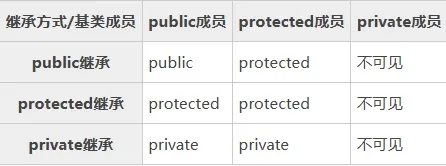
C++支持public,protected,private三种继承
不写默认private继承,一般使用public继承
普通成员变量
1 2 3 4 5 6 7 8 9 10 11 12 13 14 15 16 17 18 19 20 21 22 23 24 25 26 27 28 29 30 31 32 33 34 35 36 37 38 39 40 41 #include <iostream> using namespace std;class Base { public : int a1; protected : int b1; private : int c1; }; class Son : public Base{ public : Son () { a1 = 1 ; b1 = 2 ; cout << "a1:" << a1 << endl; cout << "b1:" << b1 << endl; } void set (int value) }; void Son::set (int value) b1 = value; cout << "b1:" << b1 << endl; } int main () Son s; s.a1 = 1 ; s.set (10 ); return 0 ; }
父类public和protected属性继承给子类,表现为protected(类内访问)
父类private成员变量不可访问
1 2 3 4 5 6 7 8 9 10 11 12 13 14 15 16 17 18 19 20 21 22 23 24 25 26 27 28 29 30 31 32 33 34 35 36 37 38 39 40 41 42 #include <iostream> using namespace std;class Base { public : int a1; protected : int b1; private : int c1; }; class Son : protected Base{ public : Son () { a1 = 1 ; b1 = 2 ; cout << "a1:" << a1 << endl; cout << "b1:" << b1 << endl; } void set (int value) }; void Son::set (int value) b1 = value; cout << "b1:" << b1 << endl; } int main () Son s; s.set (10 ); return 0 ; }
父类public和protected属性继承给子类,表现为private(类内访问)
父类private成员变量不可访问
1 2 3 4 5 6 7 8 9 10 11 12 13 14 15 16 17 18 19 20 21 22 23 24 25 26 27 28 29 30 31 32 33 34 35 36 37 38 39 40 #include <iostream> using namespace std;class Base { public : int a1; protected : int b1; private : int c1; }; class Son : private Base{ public : Son () { a1 = 1 ; b1 = 2 ; cout << "a1:" << a1 << endl; cout << "b1:" << b1 << endl; } void set (int value) }; void Son::set (int value) b1 = value; cout << "b1:" << b1 << endl; } int main () Son s; s.set (10 ); return 0 ; }
静态成员变量
除了初始化时要通过父类初始化 ,其余和普通成员变量相同
1 2 3 4 5 6 7 8 9 10 11 12 13 14 15 16 17 18 19 20 21 22 23 24 25 26 27 28 29 30 31 32 33 34 35 36 37 38 39 40 41 42 43 44 #include <iostream> using namespace std;class Base { public : static int a; protected : static int b; private : static int c; }; int Base::a = 100 ;int Base::b = 200 ;int Base::c = 300 ;class Son : public Base{ public : void print () { cout << "Access Base::a in Son: " << a << endl; cout << "Access Base::b in Son: " << b << endl; } }; int main () Son s; s.print (); cout << "Access Base::a directly: " << Base::a << endl; cout << "Access Son::a directly: " << Son::a << endl; return 0 ; }
成员方法
参考普通成员变量和表格
静态成员方法和普通成员方法继承规则一样
1 2 3 4 5 6 7 8 9 10 11 12 13 14 15 16 17 18 19 20 21 22 23 24 25 26 27 28 29 30 31 32 33 34 35 36 37 38 39 40 41 42 43 44 45 46 47 48 49 50 #include <iostream> using namespace std;class Base { public : void show1 () protected : void show2 () private : void show3 () }; class Son : public Base{ public : void show () }; void Base::show1 () cout << "Base::show1()" << endl; } void Base::show2 () cout << "Base::show2()" << endl; } void Base::show3 () cout << "Base::show3()" << endl; } void Son::show () show2 (); } int main () Son s; s.show (); s.show1 (); return 0 ; }
构造函数和析构函数
参考成员方法,继承规则一致
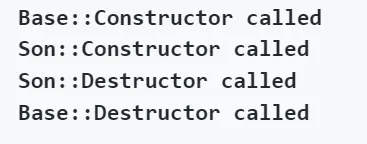
直接父类的无参构造 会被子类构造函数 默认调用(父类对象销毁也会触发父类析构)
调用顺序:父类构造->子类构造->子类析构->父类析构
原因:子类需要父类的属性和方法,需要父类先构造。后销毁
1 2 3 4 5 6 7 8 9 10 11 12 13 14 15 16 17 18 19 20 21 22 23 24 25 26 27 28 29 30 31 32 33 34 35 36 #include <iostream> using namespace std;class Base { public : Base () { cout << "Base::Constructor called" << endl; } ~Base () { cout << "Base::Destructor called" << endl; } }; class Son : public Base{ public : Son () { cout << "Son::Constructor called" << endl; } ~Son () { cout << "Son::Destructor called" << endl; } }; int main () Son s; return 0 ; }
子类不显式调用父类构造则默认调用无参构造
子类构造 通过初始化列表 来调用父类构造
1 2 3 4 5 6 7 8 9 10 11 12 13 14 15 16 17 18 19 20 21 22 23 24 25 26 27 28 29 30 31 32 33 34 35 36 37 38 39 40 41 42 43 44 45 46 47 48 49 #include <iostream> using namespace std;class Base { public : Base () { cout << "Base::Default Constructor called" << endl; } Base (int x) { cout << "Base::Parameterized Constructor called with x = " << x << endl; } ~Base () { cout << "Base::Destructor called" << endl; } }; class Son : public Base{ public : Son (int x, int y) { cout << "Son::Parameterized Constructor called with y = " << y << endl; } Son (int x, int y, int z) : Base (x) { cout << "Son::Parameterized Constructor called with y = " << y << endl; } ~Son () { cout << "Son::Destructor called" << endl; } }; int main () Son s2 (10 , 20 ) ; cout << "------------------------" << endl; Son s1 (10 , 20 , 30 ) ; return 0 ; }
方法重写
子类和父类有相同的属性和方法,直接调用的是子类的,如果要调研父类的,使用::
1 2 3 4 5 6 7 8 9 10 11 12 13 14 15 16 17 18 19 20 21 22 23 24 25 26 27 28 29 30 31 32 33 34 35 36 37 38 #include <iostream> using namespace std;class Base { public : int a; void show1 () }; class Son : public Base{ public : int a; void show1 () }; void Base::show1 () cout << "Base::show1()" << endl; } void Son::show1 () cout << "Son::show1()" << endl; } int main () Son s; s.show1 (); s.a = 10 ; s.Base::show1 (); s.Base::a = 20 ; return 0 ; }
总结 继承规则
构造
子类构造默认调用直接父类的无参 构造
如果(初始化列表方式)显示调用父类构造,则不会调用父类无参构造
析构执行顺序与构造执行顺序相反